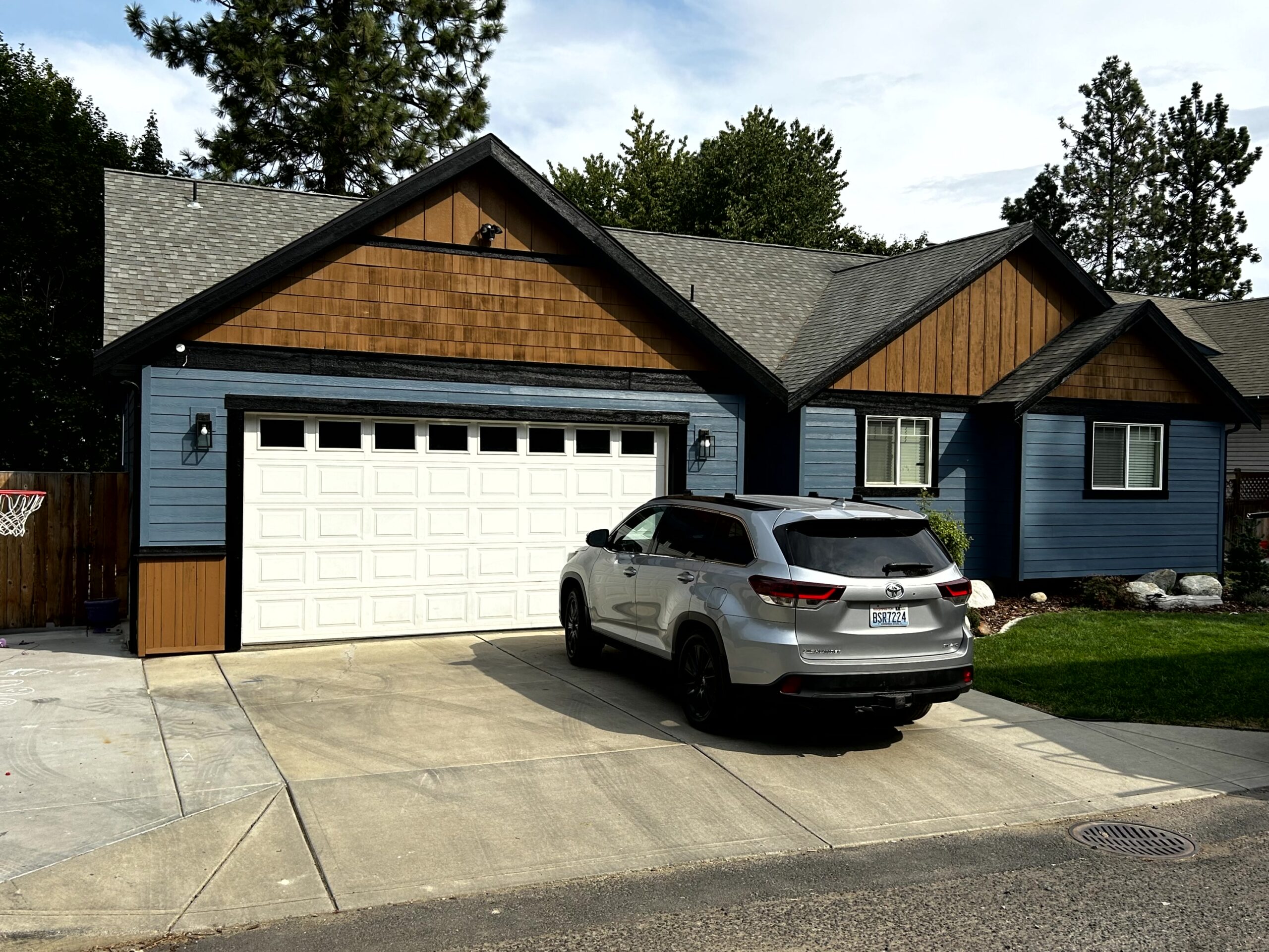
Dark exterior paint on buildings looks sleek, modern, and bold. But when you’re dealing with year-round sun and high heat, those dark tones can work against you. From premature fading to substrate damage and higher energy bills, the wrong product or application method can turn a trend into a costly mistake.
This guide explores the science behind how dark exterior paint performs in hot climates. We’ll cover thermal performance, UV degradation, light reflectance values (LRV), product technologies designed to mitigate heat retention, and service-specific recommendations to help you make smart, long-term decisions.
If you’re painting a building in a sun-exposed environment, this blog will show you how to avoid common failures and still achieve the bold look you want.
Why Heat and UV Matter More Than You Think

Heat Absorption
The physics are simple: dark colors absorb more heat. Surfaces painted in deep tones like charcoal, navy, or black can be up to 20°F hotter than light-colored equivalents. This added heat buildup increases the risk of:
-
Substrate expansion
-
Warping (especially in wood and vinyl)
-
Premature breakdown of the paint film
On surfaces like fiber cement, stucco, or metal, the stress from temperature swings can be even more pronounced.
UV Radiation and Color Fade
Dark pigments degrade faster under direct sunlight. UV rays break down organic pigments, leading to:
-
Noticeable fading within 2–3 years if the wrong paint is used
-
Chalking, where the binder fails and pigment residue becomes visible on the surface
-
More frequent repainting cycles—often within 5 years
South- and west-facing walls are most vulnerable due to prolonged afternoon exposure.
Energy Efficiency Concerns
Dark exterior paint can significantly increase thermal gain, pushing indoor temperatures up and making air conditioning systems work harder. This is especially true for:
-
Metal buildings without radiant barriers
-
Stucco homes with poor insulation
-
Commercial or retail buildings with high solar exposure
Common Problems When Using Dark Exterior Paint in Hot Areas
Peeling and Blistering
Moisture trapped under dark coatings heats up quickly. Without proper priming and substrate prep, this can lead to blisters, bubbles, and eventual peeling. Wood and unsealed stucco are particularly susceptible.
Fading and Chalking
Without UV-stable pigments or protective binders, dark exterior paint breaks down faster. Improper application or using low-quality paints accelerates this process.
Warping or Substrate Cracking
Wood expands and contracts. Dark colors amplify this effect, leading to cracked seams, joint failure, and stress fractures in the coating. Fiber cement may delaminate if the color system used exceeds manufacturer LRV limits.
When Dark Colors Work (and When They Don’t)
When They Work
-
On well-insulated modern buildings with radiant barriers
-
On façades that face north or east, avoiding full afternoon sun
-
When paired with IR-reflective pigments, UV-stable binders, and breathable primers
-
In climates where diurnal temperature swings are moderate
When to Avoid
-
On aged wood siding without proper sealing or primer
-
On south- or west-facing walls in deserts or tropical regions
-
When using budget-grade exterior paints not designed for sun exposure
-
If you’re planning to repaint without correcting existing prep failures
What Makes a Paint System Suitable for Dark Colors in Heat
Key Product Features to Look For
-
IR-reflective pigments: Reduce surface temperature by deflecting infrared light
-
UV-resistant binders: Prevent fading and breakdown under solar exposure
-
Acrylic or urethane-based chemistry: Better flexibility and weather resistance
-
Vinyl-safe technology: Prevents warping on vinyl siding when using dark tones
Product Examples
| Brand | Product | Technology | Key Benefits |
|---|---|---|---|
| Sherwin-Williams | Duration® Exterior, Emerald® Rain Refresh | VinylSafe™, IR Reflective Pigments | Fade resistance, flexible finish |
| Behr | Ultra™ Exterior, Marquee® | UV Defense, 100% Acrylic | Excellent fade resistance |
| PPG | Permanizer®, Sun-Proof® | Sun-Proof Resin™, Dirt Shedding Coating | Fade- and chalk-resistant |
| Benjamin Moore | Aura® Exterior Low Lustre | Color Lock®, High-Build Formula | Maintains deep hues longer |
Light Reflectance Value (LRV) Matters
LRV is a critical measurement when painting in hot climates. It represents how much visible and infrared light a color reflects on a scale of 0 (absolute black) to 100 (pure white).
-
Colors below 30 LRV retain significantly more heat
-
Some siding manufacturers limit paint colors to above 55 LRV to maintain warranties
-
Dark colors with reflective additives (like cool color technology) can behave more like mid-LRV colors in terms of heat performance
Surface and Substrate Considerations for Dark Exterior Paint

Wood Siding and Trim
Wood absorbs and releases moisture. Painting it dark increases heat absorption and leads to:
-
Joint expansion
-
Blistering
-
Premature coating failure
Best practice:
-
Use oil-based or bonding primers (e.g., Zinsser Cover Stain, Sherwin-Williams Loxon Primer)
-
Apply two coats of high-flex acrylic paint
-
Seal all joints and end grains
Stucco
Dark colors increase thermal stress on stucco, causing cracking or coating delamination. Use:
-
Elastomeric coatings like SherLastic or Loxon XP
-
UV-stable paints with expansion flexibility
Fiber Cement and Composite Panels
Check manufacturer LRV restrictions before applying dark exterior paint. Most have a minimum LRV of 45–55 for dark applications unless IR-reflective paint is used.
Suggested:
-
Benjamin Moore Aura® Exterior (low-lustre)
-
Sherwin-Williams Duration® with VinylSafe™
Metal and Aluminum Siding
Dark exterior paint leads to thermal expansion in metal panels, causing oil-canning or waviness. Use:
-
Direct-to-metal (DTM) acrylic or urethane systems
-
Heat-diffusing coatings like Tnemec, Sherwin-Williams DTM Acrylic, or Rust-Oleum High Heat Enamel
Best Practices to Minimize Heat-Related Paint Issues
Use Primer Strategically
White or reflective primers help block initial heat absorption and ensure better adhesion. Use breathable primers on porous surfaces like stucco or masonry.
Choose the Right Sheen
-
Satin and low-lustre reflect more light and resist dust buildup
-
Flat finishes retain more heat and chalk faster in sun-exposed conditions
Application Timing and Weather
-
Avoid painting in peak afternoon sun
-
Follow product-specific drying time guidelines
-
Never apply if temperatures exceed 90°F during drying phase
Use of Heat-Reflective Additives
Some paints include cool color tech; others can be modified with aftermarket additives. Examples:
-
Nansulate®: Nanotechnology thermal barrier
-
CoolWall® by Tex-Cote: Used on commercial exteriors to reduce surface temps by 30°F
-
EnviroCoat® Reflective Paint Additives
Energy Impact of Dark vs. Light Colors: What the Data Says
Comparative Study Highlights
| Study | Result | Relevance |
|---|---|---|
| U.S. Department of Energy | Dark surfaces can be 15–20°F hotter than light-painted surfaces | Increases HVAC loads |
| Lawrence Berkeley Lab | Reflective coatings reduced wall heat gain by up to 40% | Key for stucco and metal buildings |
| Florida Solar Energy Center | Cool roof coatings reduced cooling costs by 15% annually | Color affects energy usage year-round |
Energy Savings Potential
-
Lower internal temperatures = reduced HVAC run time
-
Buildings may qualify for LEED or Energy Star points
-
Reflective coatings pay for themselves over time in commercial and multifamily settings
Service-Specific Recommendations for Smart Property Owners
Commercial Properties
Use high-performance paints with long recoat cycles and fade resistance. Look for products with:
-
Anti-fungal additives
-
Dirt-shedding finishes
-
Cool color pigments
Consider ceramic-based or nano-reflective paint systems in areas where cooling costs are high or where paint maintenance cycles are expensive.
HOAs and Multi-Unit Residences
-
Establish color guidelines with minimum LRV thresholds
-
Use mockups to simulate sunlight direction and surface temperature
-
Recommend tested systems like Sherwin-Williams Duration with VinylSafe™ for dark accents
Historic or High-End Residential Projects
Limit dark colors to controlled surfaces like:
-
Entry doors
-
Shutters
-
Accent trim
Always test on a small section before proceeding to full application. Monitor for heat-related paint failure during the first season.
Pros and Cons Summary Table
| Factor | Dark Colors | Light Colors |
|---|---|---|
| Heat Absorption | High | Low |
| UV Resistance Needs | Critical | Moderate |
| Cooling Energy Usage | Higher | Lower |
| Maintenance Needs | More frequent | Less frequent |
| Visual Impact | Bold, modern | Classic, flexible |
| Warranty Risks | Higher on certain materials | Lower risk |
| Best for | Accent areas or IR-enhanced coatings | Full coverage, heat control |
| Product Examples | SW Duration®, BM Aura®, Behr Marquee® | Most exterior-grade acrylics |
To Sum It Up
Dark exterior paint colors can absolutely work in hot climates—but only when the product, preparation, and substrate are suited to the environment. Applying a standard paint to a sun-exposed façade without checking LRV or UV resistance is a common and costly mistake.
Success comes down to using IR-reflective pigments, proper primers, weather-aware application practices, and understanding the limitations of your building materials.
Whether you manage commercial real estate, sit on an HOA board, or are repainting your home in a desert zone, making the right paint system choice will protect your investment for years—not just make it look good for one season.